Editor's note: This article was originally published in the Etsy News blog on April 22, 2013.
What happened to Earth Day? In the 43 years since its inception, the movement has deteriorated from one that drove some of the most significant environmental legislation in US history, to yet another platform for corporate marketing. It is hard not to be jaded in an era fraught with greenwashing where seemingly every company on earth touts their eco efforts, large and small, substantial and empty.
But let's remember that the first Earth Day was not a ploy for publicity, or derived to sell faux “green” merchandise. It was a rallying cry felt across political parties, generations, and demographics, a cry to protect our natural environment with substantial action. The first Earth Day instigated the Clean Air Act of 1970, the Clean Water Act of 1972, and the Endangered Species Act of 1973, and the creation of the Environmental Protection Agency. It's time to take it back!
It is in the original spirit of Earth Day that we want to celebrate by publicly sharing Etsy's ecological impact reduction goals and our commitment to the planet. From our calculations, we have set aggressive reduction goals, but this is important. By publishing them we are putting ourselves on the hook to deliver.

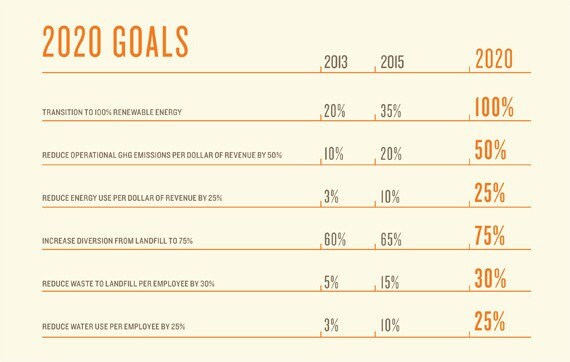
Our commitment: Etsy is committed to proactively countering the planet's gathering ecological crises. Etsy embraces our responsibility to minimize the ecological footprint of our operations and our duty to empower and incentivise the users of our platform to do the same.
With these imperatives in mind, we have started the long journey to analyze the complete impact of our business operations. We have largely captured the current impact of our office facilities and data centers. We recognize, however, that the impact of Etsy includes much more than our company operations. As we emphasize every day in the office — Etsy's success is built on the businesses of our sellers, and that includes their ecological impact.
We are starting to assess the impact of our marketplace, starting with the shipping of goods purchased on Etsy. We are also measuring our operational supply chain, employee commuting, and business travel, because we need to be complete. We don't want to cop-out with so much at stake. Etsy is a unique company and, we believe, proof that commerce can be lastingly fulfilling and sustainable.
We don't want to be alone in this. Every business, and individual can contribute to driving the significant reform we need — as did the original Earth Day.
So what can you do?
- Transform your personal impact at Practically Green.
- Switch to using renewable energy at home in just 5 minutes.
- If your company isn't earnestly measuring and lowering their impact, force the issue! Let management know that companies with strong sustainability programs have 43% more efficient business operations, 43% stronger public image, 55% better morale, and 38% higher employee loyalty than those who don't. (Sources: Practically Green, Society for Human Resource Management, and “The 5 Traits of Firms that Create Sustainability ROI,” Harvard Business School, 2012)
We want to share all of our ecological work. If your business could benefit from our assessment methodology or improvement strategies, please get in touch.
